
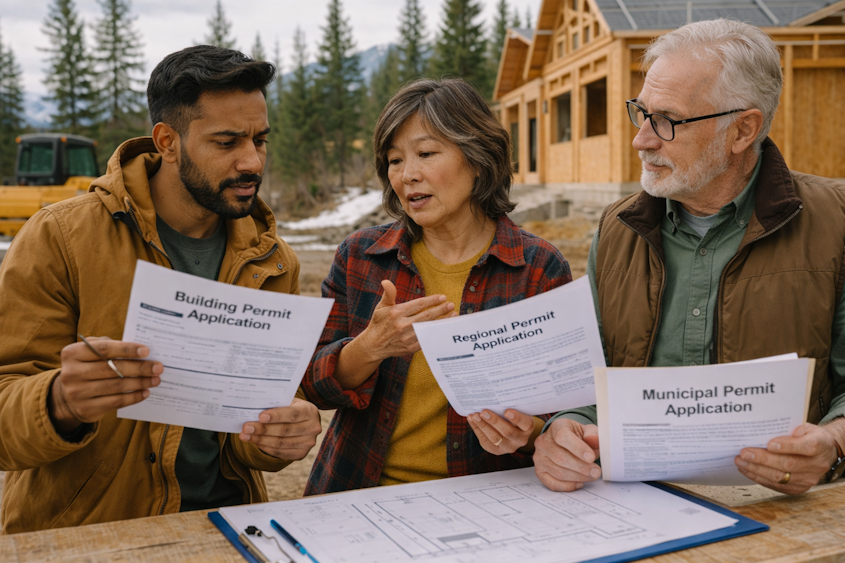
So, you did it. You found the perfect patch of land in the Cariboo. Maybe it’s a massive acreage overlooking the Fraser River, or a sweet little lot just outside Quesnel. You can already see it, can’t you? The house, the deck, the whole life you’re about to build. But then a little voice whispers, what about the building permit? And, more importantly, is it actually cheaper to get one from the Cariboo Regional District (CRD) versus an incorporated city like Williams Lake or Quesnel?
It’s a question that gets a lot of hopeful homebuilders tangled up. The honest answer? It all comes down to where, exactly, your property lines are drawn. This guide is here to untangle the real-world costs, timelines, and crucial differences in Cariboo building permit costs, regional vs municipal, so you can budget right and skip the headaches.
Why Does Your Lot’s Location Decide Your Permit Path?
First thing’s first—let’s get the lay of the land. In British Columbia, your property is either tucked inside an incorporated municipality (like the City of Quesnel) or it’s out in an unincorporated area that’s governed by a regional district (that’s the CRD).
Think of it this way. A municipality is like a planned community with its own local government, a detailed rulebook, and its own services like water, sewer, and road crews. The regional district, on the other hand, is like the huge, sprawling countryside between those towns. It provides services, sure, but on a much broader and less hands-on scale.
Your address is what decides which office you’ll be calling for your permit. You don’t get to choose; it’s a geographical fact.
The Million-Dollar Question: How Do Permit Costs Really Stack Up?
Trying to compare costs directly is tough because, let’s face it, every project is different. But we can absolutely pull back the curtain on the things that drive up the final bill. The cost comparison for building permits between Quesnel vs CRD shows some pretty clear patterns.
A Tale of Two Permits: Quesnel (Municipal) vs. CRD Area ‘G’ (Regional)
Let’s play pretend for a second. You’re building a brand-new, 2,000-square-foot house. What might the permit costs look like in each spot?
- In the City of Quesnel (Municipal): The city usually calculates fees based on how much you say the construction is worth. For a hypothetical $500,000 home, the basic building permit fee could easily land somewhere in the $4,000 – $5,000 range. But hold on, that’s just the opening act.
- In the CRD (Regional): The Regional District permits in the Cariboo also often use construction value, but their math can be a bit different. For that same $500,000 house, your fee might be a little lighter, maybe in the $3,500 – $4,500 ballpark.
But wait, there’s more. That initial permit fee is only one piece of a much larger financial puzzle.
Unpacking the Fees: What Are You Actually Paying For?
This is where things really start to look different. Both places will charge you for the application itself, plan reviews, and plumbing permits. The real game-changer? Services.
- Development Cost Charges (DCCs): These are big fees that cities collect to help pay for the new roads, water mains, and sewer lines your new development will need. In town, these can tack on thousands of dollars to your bill. DCCs are way lower, or sometimes don’t even exist, in the rural CRD areas.
- Service Connection Fees: In a city, you’re going to pay hefty fees to hook up to city water and sewer. Out in the CRD, you won’t have those specific fees, but you’ll be on the hook for the entire cost of drilling a well and installing a proper septic system—and that’s a massive project expense all by itself.
- Other Fees: Don’t forget all the little extras that can pop up, like damage deposits, fees for fireplaces, or special charges if your plans need a complex engineering review.
Is It Just About the Money? Other Key Differences to Think About
While cost is obviously a huge deal, it’s not the only thing. The whole experience of building in town versus out in the country is like night and day.
Timelines and Inspections: Who Moves Faster?
This is a classic trade-off. A city like Quesnel has more staff, but they’re also swamped with a higher volume of applications in a tiny area. The CRD, meanwhile, has a gigantic territory to cover. Getting an inspector out to a remote property might mean scheduling way in advance. Honestly, there’s no clear winner here; it really just depends on how busy they are that season.
Bylaw Headaches: How Many Hoops Will You Jump Through?
This is where living in the country really starts to shine for a lot of people. Quesnel building bylaws and zoning rules are going to be incredibly detailed. They can control stuff like:
- How far your house has to be from the property line (setbacks).
- The maximum height of your home.
- Sometimes, even nitpicky aesthetic details.
Regional district bylaws for rural areas? They’re typically much simpler and way more flexible, giving you a ton more freedom in how you design and place your dream home.
Making the Right Choice for Your Cariboo Build
So, what’s the verdict? Which is better? It all boils down to your priorities. Here’s a quick-and-dirty summary to help you see the whole picture:
| Feature | Municipal (e.g., Quesnel) | Regional (CRD) | | :——————– | :———————————————————– | :——————————————————————- | | Potential Permit Cost | Generally higher because of DCCs and pricey service fees. | The basic permit might be similar, but total fees are often lower. | | Bylaw Strictness | Higher. Get ready for more rules on zoning and land use. | Lower. You get way more flexibility and freedom as a property owner. | | Required Services | You must hook up to municipal water and sewer (and pay for it). | You’re responsible for your own well and septic system. | | Timeline | Inspections could be faster, but they can get backlogged. | You’ll likely need to schedule inspections further in advance. |
If you love the convenience of city services and you’re cool with the costs and stricter rules that come with them, a municipal build is probably your jam. But if your dream is all about freedom, space, and fewer regulations—and you’re ready to manage your own water and septic—then a rural CRD property is calling your name.
Don’t Go It Alone: How a Local Expert Can Save You a Fortune
This guide for Cariboo-Chilcotin home builders should give you a solid start, but every single project has its own quirks. Building a home is a monumental task, both physically and financially. Getting the permits and construction done right is only half the battle; getting your finances in order is the other. Before you even think about breaking ground, it’s incredibly smart to make sure your budget, taxes, and overall financial plan are rock-solid. For advice that’s tailored to the financial side of your project, from simple bookkeeping to complex tax implications, talking to a professional is a non-negotiable step. You can get the clarity you need for your unique situation by reaching out to an accountant for a consultation.